
Ireland Immigration Rules Update
If you're working toward an Ireland immigration visa, or you already call Ireland home, there's a piece of legislation worth your attention. On September 9, 2026, the Irish Cabinet signed off on priority drafting of the Irish Nationality and Citizenship (Amendment) Bill 2026 — arguably the biggest change to Irish citizenship law in decades. It hasn't passed into law yet, but it's worth understanding early.
Here's what's actually changing, why it matters, and what you can do about it right now.
One thing before you dive in: this Bill has only cleared the drafting-approval stage. It still has to survive pre-legislative scrutiny, debate in both the Dáil and Seanad, and presidential sign-off before it's actually a real law. Nothing here changes your current legal position. Talk to a qualified adviser before you make any decisions based on it.
What's Changing: The Latest Immigration News from Dublin

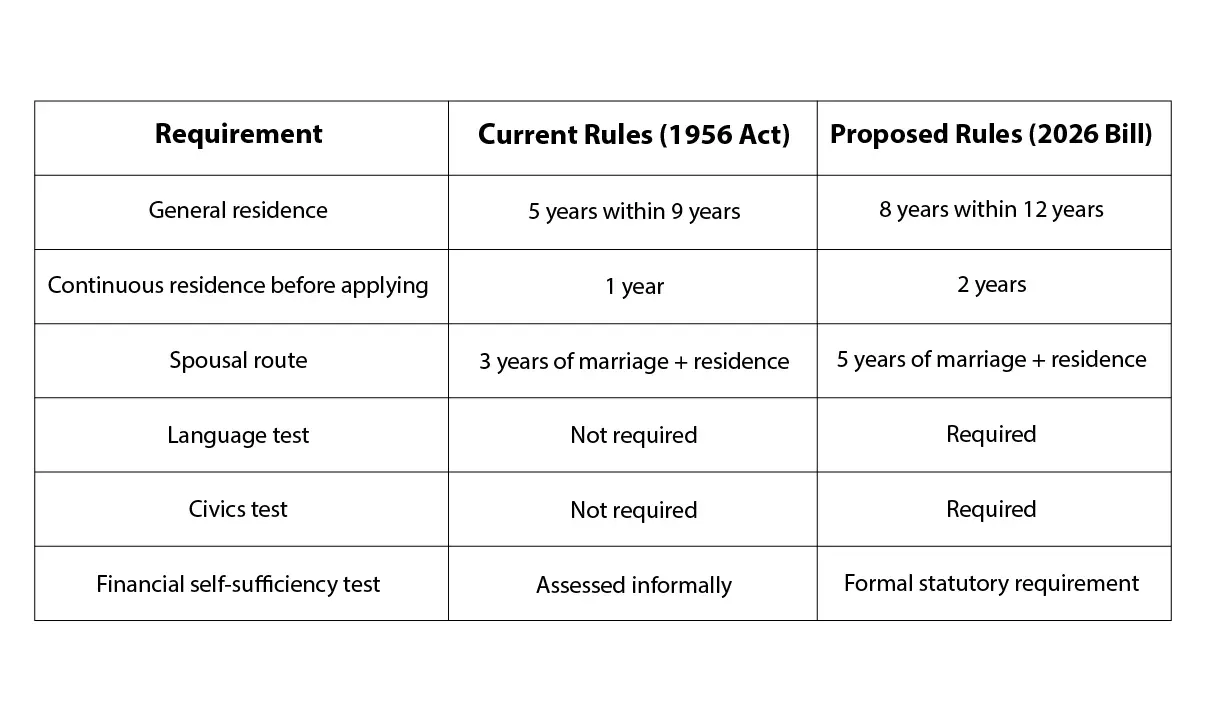
The proposed Bill would replace the existing framework laid out in the Irish Nationality and Citizenship Act 1956. As things stand, most applicants can apply for naturalisation after five years of reckonable residence within a nine-year window, with one full year immediately before applying.
Under the new proposal, that jumps to eight years within a twelve-year window, including two full continuous years right before you apply. Alongside that, the government is proposing:
- A mandatory language test — English, Irish, or Irish Sign Language
- A civics test on Irish history, culture, and democratic institutions
- A formal check on economic self-sufficiency and tax compliance
- A longer marriage and civil partnership pathway, stretching from three years to five
- Broader powers for the Minister for Justice to revoke citizenship on public order or security grounds
This is genuinely one of the biggest pieces of latest Immigration news to come out of Ireland this year, and it touches thousands of people currently building their lives here.
Current Rules vs. Proposed Rules
Why the Government Says This Is Needed
The Department of Justice's pitch is that this brings naturalisation closer to broader EU standards, and reframes citizenship as something earned through sustained integration rather than simply waiting out a clock. Officials also point to the steady climb in naturalisation grants — now running between 25,000 and 26,400 a year — as part of the justification for tightening things up.
Everyone's not convinced yet. Groups including the Irish Refugee Council, the Immigrant Council of Ireland, and the Irish Council for Civil Liberties have pushed back. Their core objections: the government hasn't published data showing there's actually a problem with the current system, the "EU alignment" argument skips over several EU countries still running a five-year model, and stretching out timelines does nothing to fix the processing backlogs that already exist. Whatever side of the debate you land on, it's a reminder that ireland immigration policy rarely stays still for long.
How Ireland Would Compare to the Rest of the EU
If it passes as written, an eight-year residence requirement would place Ireland immigration rules toward the stricter end of the EU spectrum — tougher than most, though not the toughest.
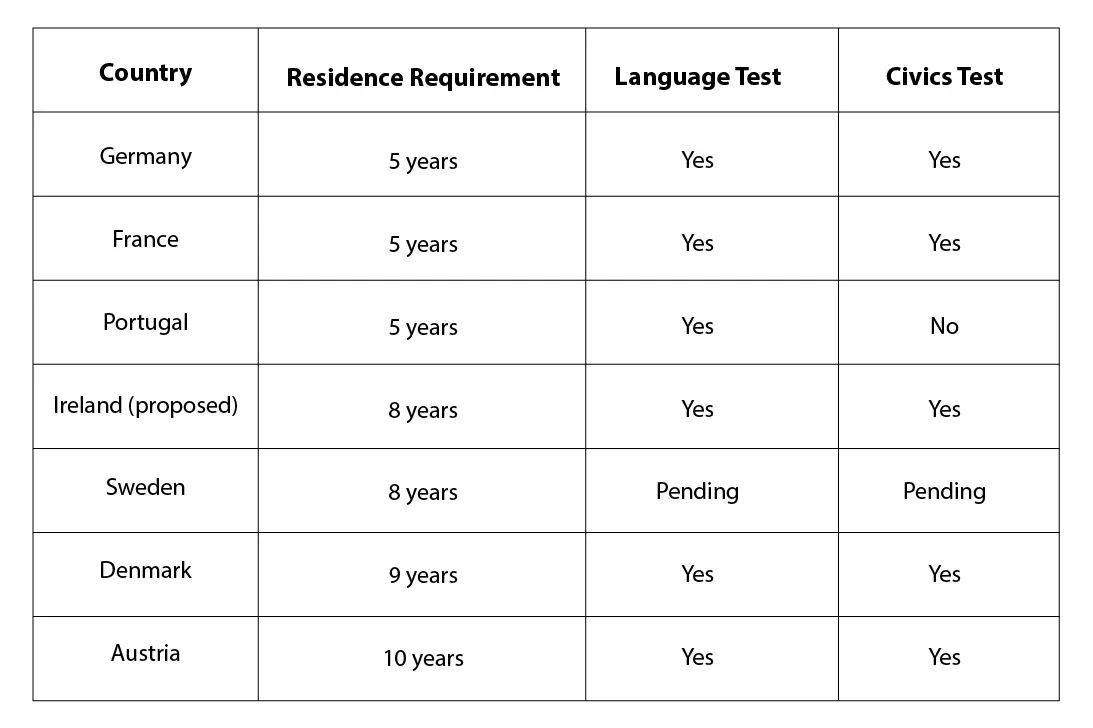
Interestingly, Germany moved the opposite direction in 2024, cutting its own residence requirement from eight years down to five. If this Bill passes, Ireland would sit closer to Denmark and Austria than to its nearest neighbours.
Who This Would Actually Affect
Employment Permit Holders (Stamp 1, 1H, 1G): Anyone on a Critical Skills Employment Permit or General Employment Permit builds reckonable residence under Stamp 1 or Stamp 1H. Someone who is expected to qualify after five years would now be looking at eight years— meaning more permit renewals, more paperwork and more cost along the way.
Stamp 4 and Stamp 5 Holders: Time spent under Stamp 4 (general unrestricted permission) or Stamp 5 would still count towards naturalisation. You'd still get there — it would just take longer.
Spouses and Civil Partners of Irish Citizens: The marriage or civil partnership requirement would rise from three years to five before you can apply.
Temporary Protection Holders: Time spent under the EU Temporary Protection Directive (introduced in 2022) would stay excluded from reckonable residence, exactly as it is under current rules.
Anyone Currently Building Up Residence: There's no grandfathering clause in the draft as it stands. That means someone who hasn't submitted their application before the new law commences, Could get pulled into the new eight-year requirement - even someone a few months from the five-year mark.
What You Should Do Now
- Check where you actually stand If you already meet the five-year residence rule, or the three-year spousal rule, pull your file together and consider applying before any new law takes effect.
- Confirm your reckonable residence Make sure time spent under Stamp 1, 1H, 1G, 3, 4, or 5 is properly documented, with no unexplained gaps between permission renewals.
- Keep your status airtight Maintain valid permission, keep your tax records clean, and steer clear of unapproved absences from the State.
- Get advice specific to you Every case looks different, and legislation like this can shift during drafting and debate. It's worth speaking with our experts before
Conclusion
The Irish Nationality and Citizenship (Amendment) Bill 2026 is still early in its journey, but it signals a clear move toward a longer, more structured path to citizenship. Whether you're just starting your Ireland immigration visa application or you're already several years into building your residence history, it's worth understanding how these proposed changes could reshape your timeline.
Republic of Ireland immigration policy can shift during the legislative process, so treat this article as a starting point rather than the final word. For guidance specific to your permit type, residence history, or family situation, speak with our experts or book a consultation with the Irish Expert team.
Visit our Home page to learn more about our services, or contact our team with any questions about your Ireland journey.