Moving to Ireland from India: Complete Airport, Luggage, and Travel Preparation Guide
Moving to Ireland from India takes more than an approved permit and a flight ticket. Before you fly, keep your original documents in your cabin bag, check your airline’s baggage rules, stay within Irish customs limits, and plan to register with immigration within 90 days of landing. This guide walks through each step so nothing catches you out at the airport.
What documents should you carry in your hand luggage?
Keep your passport with the entry visa, your employment permit, and a letter or contract from your employer in your cabin bag. Never put them in checked luggage. If the bag goes missing, so does your proof of why you’re travelling.
Indian citizens need an entry visa for Ireland, so the visa sticker must be in your passport before you board. Carry printed copies as well as digital ones. Phones run out of battery, and airport Wi-Fi isn’t always reliable.
A simple document checklist:
- Passport (and the biometric page photocopied)
- Entry visa and employment permit
- Employer letter or signed contract
- Address of your first accommodation and your employer’s contact details
- Degree certificates and experience letters
- Prescriptions and a doctor’s letter for regular medication
- Some euros, plus a card that works internationally
Why the employer letter and permit matter: Ireland’s immigration service lists them among the documents for your first registration after arrival. A border officer may also ask what you’ll be doing in Ireland and where you’ll stay. Short, clear answers backed by paperwork make that conversation easy.
How much luggage can you take from India to Ireland?
There’s no single allowance. It depends on your airline, fare type, and route, so the only reliable source is your own booking. Check the checked-bag weight, the cabin-bag size, and the number of pieces before you pack anything.
A few things to watch:
- If you connect through another city, make sure the baggage allowance applies to the whole journey. Separate tickets can mean separate rules.
- Weigh your bags at home. A cheap luggage scale saves an argument at the check-in counter.
- If you need extra baggage, see whether your airline lets you add it before the day of travel.
- Put one change of clothes, chargers, and essential medicines in your cabin bag in case checked luggage is delayed.
Most people overpack. Bulky items like quilts, heavy jackets, and kitchen equipment are easy to buy in Ireland, and carrying them across the world rarely makes sense.
What should be on your packing list for Ireland?
Pack for mild, changeable weather, bring the documents that prove who you are and what you’ve done, and leave bulky household items behind. Ireland is rarely extremely hot or extremely cold, but rain can turn up on any day.
Clothing: Layers work better than one heavy coat. A waterproof jacket and comfortable, water-resistant shoes will get more use than anything else you pack. Add formal clothes for your first week at work.
Electronics: Ireland uses the Type G plug at 230V. Bring a travel adapter for your phone and laptop chargers, because you’ll want them the moment you land.
Documents and records: Original degree certificates, experience letters, and a few passport-size photographs. Keep them with your hand luggage.
Health: Carry prescription medicines in their original packaging with the prescription. If your medicine is a controlled drug or you’re unsure about it, check the rules before you travel instead of at the airport.
Small comforts: A few familiar spices or snacks can make the first weeks easier. Just read the customs section below before you pack food.
What can you bring through Irish customs?
If you arrive directly from a country outside the EU, you can bring goods worth up to €430 free of duty and tax if you’re 15 or over. Alcohol and tobacco have separate allowances, so check Revenue’s current limits before packing either. You must also declare cash of €10,000 or more.
Ireland has a Green Channel for travellers with nothing to declare and a Red Channel for those who do. If you carry goods above your allowance, or anything restricted, use the Red Channel. Guessing wrong can lead to fines or seized items.
Food needs particular care. Meat and dairy products from outside the EU are generally not allowed. That likely includes things like paneer and milk-based sweets, so check Revenue’s list of prohibited and restricted goods before you pack.
Customs rules also depend on where you first enter the EU. If your flight connects through another European airport, part of the clearance may happen there. Revenue explains this on its travellers’ pages.
Moving permanently and planning to ship household goods? Revenue has a separate page on relief when you transfer your residence to the EU. Read it before you ship anything.
What happens when you land in Ireland?
You’ll go through three stages: border control, baggage collection, and customs. The immigration officer checks your passport, visa, and supporting documents. You then collect your bags and walk through customs.
Have your documents ready before you reach the desk. Stay calm, answer only what you’re asked, and keep your replies honest and short. After customs, you’re in the arrivals hall.
Plan your first journey before you land. Know the address of your accommodation and how you’ll get there, and keep it saved offline.
What should you do in your first 90 days?
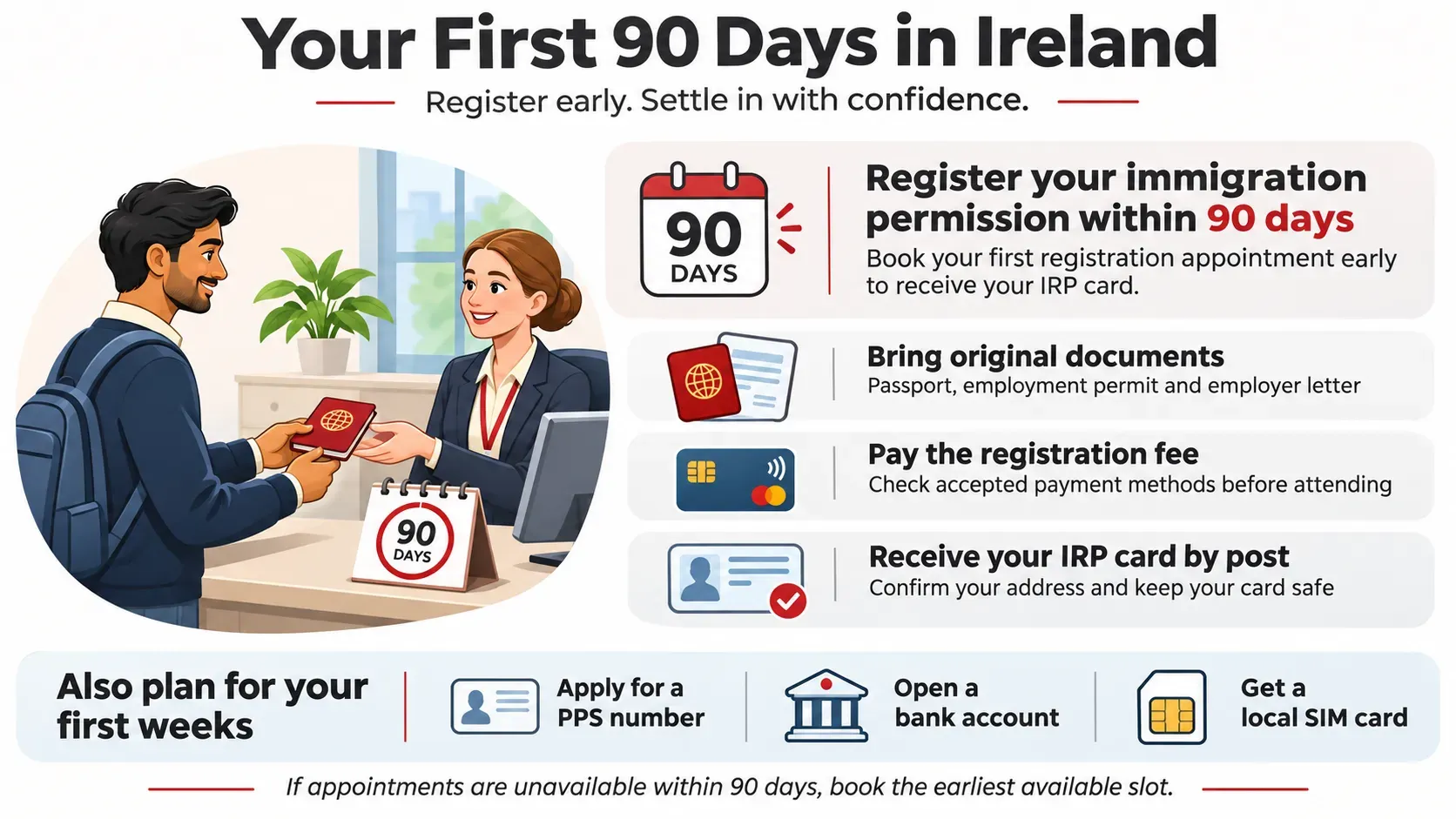
Register your immigration permission within 90 days of arriving. Ireland’s immigration service says you must register to receive your Irish Residence Permit (IRP) card, which shows the conditions of your stay.
For first-time registration, you attend an appointment at the Immigration Service Delivery office at Burgh Quay in Dublin. Bring your original documents, usually including your passport and employment permit, plus proof of your employment such as a letter from your employer. You’ll also pay a registration fee, and the office does not accept cash or contactless payments. Your card is then posted to your address.
If you cannot get an appointment within the 90 days, the immigration service has said it won’t cancel your permission or expect you to leave while you wait. Still, book as early as you can.
In your first weeks, also plan for:
- Applying for a PPS number, which you’ll need for work
- Opening a bank account
- Setting up a local SIM card
- Keeping your IRP card safe once it arrives
Final thoughts
Most problems on arrival come from small things: documents in the wrong bag, an overweight suitcase, or a food item that isn’t allowed. A checklist and a bit of time before the flight avoid nearly all of them. Final decisions on entry and permission are made by the Irish authorities, so always confirm the latest requirements on official websites before you travel.
If you’d like help understanding the requirements for your profile, speak with our experts at Irish Expert. We can walk you through your pathway and what to prepare before you fly.