
Ireland Work Permit for Diploma Holders: Eligibility, Job Opportunities, and Requirements

Can you work in Ireland with a diploma? Often, yes. The General Employment Permit doesn’t require a degree. It looks at the job offer, the employer, the salary, and whether your skills match the role. A diploma mainly closes one door: the lower-salary critical skills route. This guide covers the Ireland work permit for diploma holders, including who can apply, which jobs to look at, and what to do next.
Which Work Permit Can Diploma Holders Apply For?
The General Employment Permit (GEP) is the main route. Ireland’s Department of Enterprise, Tourism and Employment (DETE) treats every occupation as eligible unless it is on the Ineligible List of Occupations. You must also have the qualifications, skills, or experience the job requires.
People often search for an Ireland work visa for diploma holders. In practice, there are two steps. You get the employment permit first. Then, as an Indian citizen, you apply for an entry visa. Read more on our PR in Ireland page.
Why the Critical Skills Permit Is Harder With a Diploma
Critical Skills permits suit roles on the Critical Skills Occupations List. At €40,904 a year, they require a relevant degree or higher. A diploma on its own usually won’t meet that.
A second critical skills route exists for other eligible roles, at €68,911 a year. Relevant experience can count there. But that’s a high salary for most diploma-level jobs.
Ireland Work Permit Eligibility: What You Need to Meet
To meet Ireland work permit eligibility rules for a GEP, you need:
- A job offer from an employer registered with the Revenue Commissioners and trading in Ireland
- A role that isn’t on the Ineligible List
- The qualifications, skills, or experience that the role requires
- Pay at or above the minimum for your job
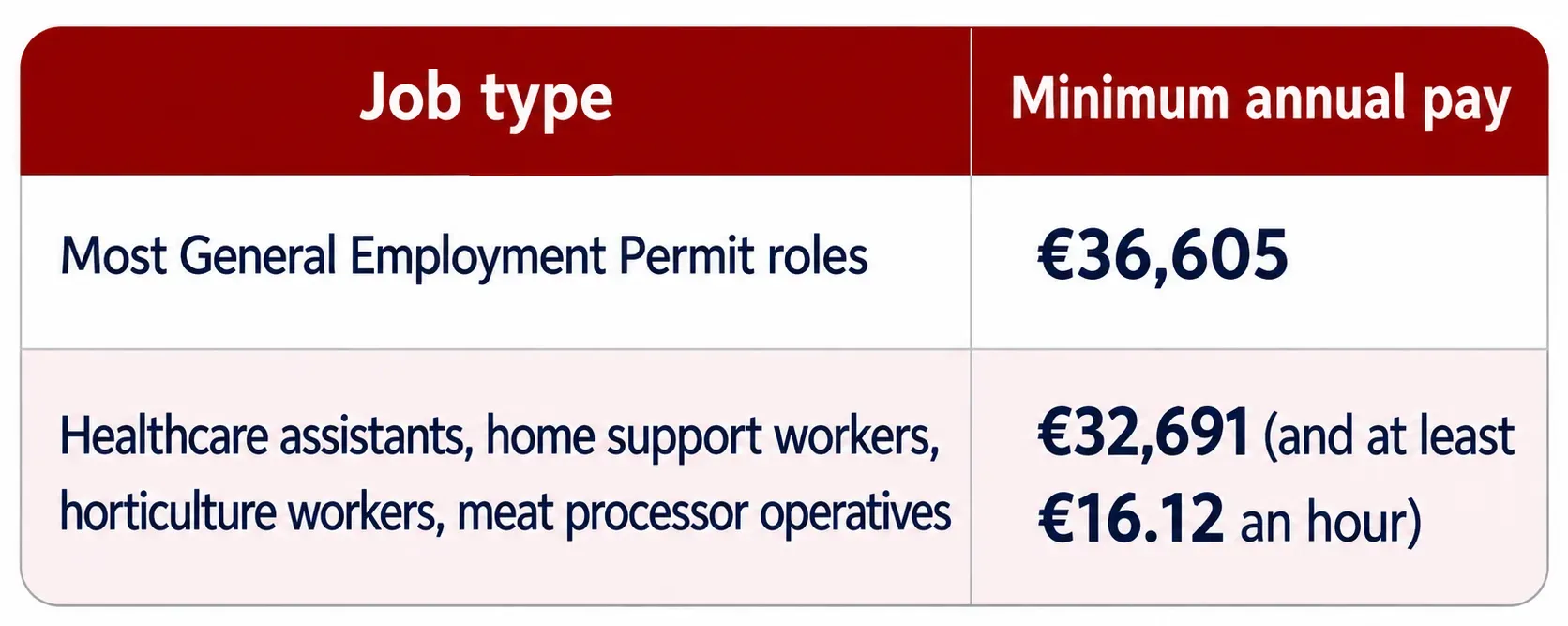
Only basic salary and certain health insurance payments count toward the minimum. Don’t assume bonuses or allowances will.
What the Employer Has to Do
Your employer carries two big checks.
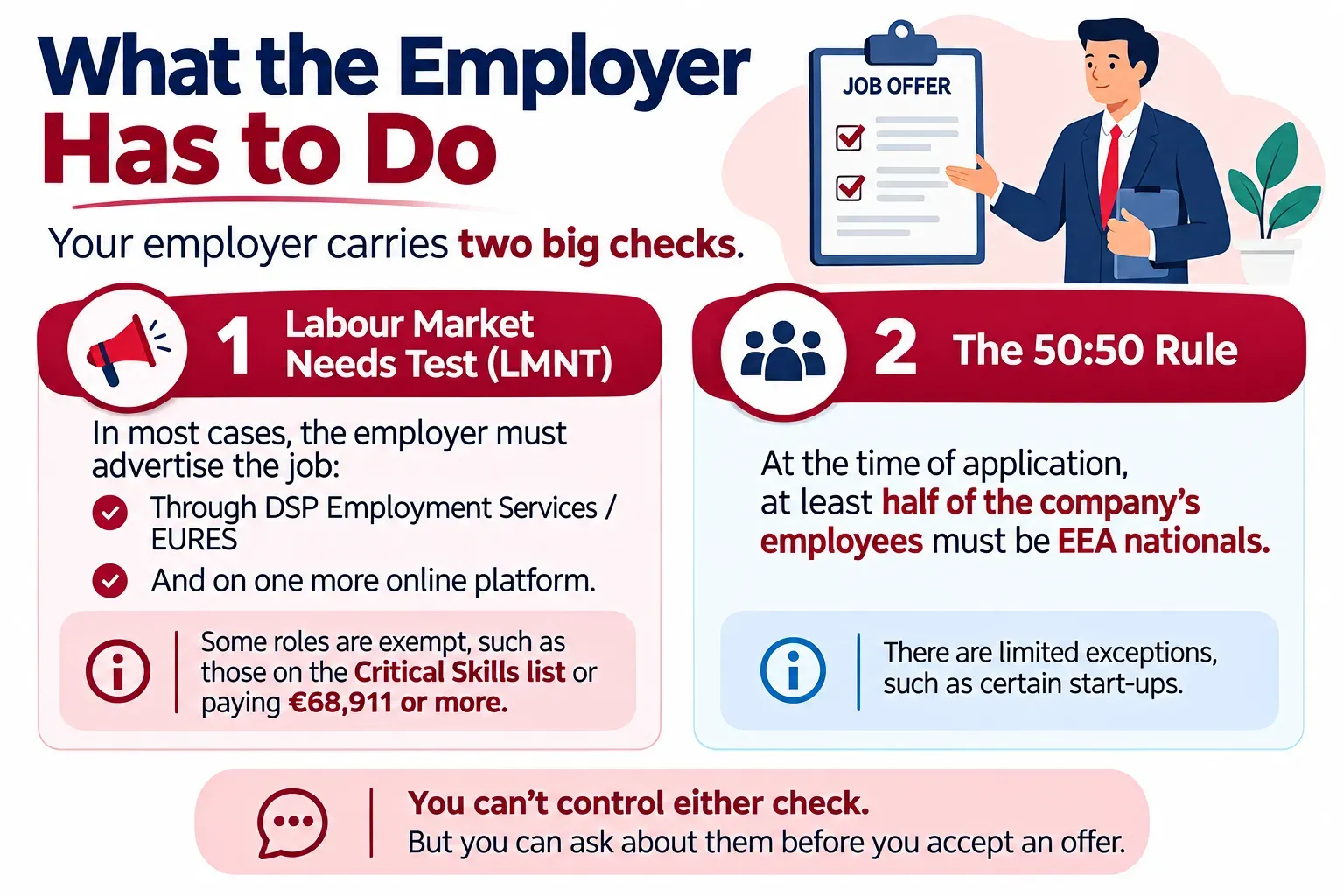
The first is the labor market needs test. In most cases, the employer must advertise the job through DSP Employment Services/EURES and on one more online platform. Some roles are exempt, such as those on the Critical Skills list or paying €68,911 or more.
The second is the 50:50 rule. At the time of application, at least half of the company’s employees must be EEA nationals. There are limited exceptions, such as certain start-ups.
You can’t control either check. But you can ask about them before you accept an offer.
Diploma Jobs in Ireland for Indians: Where to Look
Ireland's jobs for diploma holders tend to sit where employers need practical, hands-on skills. A role being eligible doesn’t mean a vacancy exists. It doesn’t mean you qualify, either. Treat the areas below as a research list, not a promise.
- Healthcare support: Healthcare assistants and home support workers have a lower pay minimum of €32,691.
Construction and technical trades. DETE’s May 2026 update said almost all construction occupations are now covered by the GEP. Steel fixers and concrete pump operators were among the roles taken off the Ineligible List. - Healthcare technical roles: Pharmaceutical technicians and dental hygienists were also taken off the list. Regulated roles need professional registration or qualification recognition first.
- Quota roles: Some occupations are open only up to a set quota. Check the current quota list.
Lists change. Always check the current Ineligible List before you apply anywhere.
What Are the Ireland Work Visa Requirements for Indians?
The process runs in stages:
- Secure an eligible job offer: The role, pay, and employer must meet the rules above.
- Employer completes the labor market needs test: Then you or the employer apply on Employment Permits Online. DETE says applications must arrive at least 12 weeks before the start date.
- Pay the fee: A new permit costs €1,000 for 6 to 24 months, or €500 for up to 6 months. If your employer is the applicant, they can’t deduct the fee from your pay or recover it from you.
- Apply for the entry visa: Once the permit is granted, apply at your local Irish embassy or consulate. This step is the same for an Ireland work visa for diploma holders as for anyone else.
Keep your diploma, mark sheets, and experience letters ready. The Ireland work visa requirements ask you to show your qualifications, skills, or experience match what the job needs.
Processing times change. Check DETE’s current processing dates instead of relying on a fixed number. And remember, a permit isn’t a residence permission. You’ll need to register with Irish immigration authorities after you arrive.
What to Know After You Arrive
A first permit can run for up to two years. It can then be renewed for up to three more. After five years, you may be able to apply to the Department of Justice for long-term residency.
You’re also expected to stay with your first employer for nine months. A move before that isn’t normally considered, apart from set exceptions such as redundancy.
Common Mistakes to Avoid
Accepting an offer below the minimum pay
Treating a job offer as permission to start work. The permit must be granted first.
Applying for roles on the Ineligible List
Counting allowances toward the minimum
Conclusion
The Ireland work permit for diploma holders is workable when the role, the pay and the employer all line up. Your next steps are simple:
Check if your target job isn’t on the Ineligible List.
Confirm the offer meets the minimum pay for that role.
Ask the employer about the Labour Market Needs Test and the 50:50 rule.
Gather your qualification and experience documents.
Ireland's jobs for diploma holders can shift as DETE reviews its lists, so it helps to check your own profile early. At Irish Expert, we can look at where you stand and talk through your options. Speak with our experts or book a consultation.